
Vitamin D in Winter: Why October Is the Time to Start Taking a Supplement

You might spend a bright January morning outside and still come home with no new vitamin D from the sun.
That sounds strange, especially when the sky is clear and the light feels strong. The problem is the sun’s position, not the weather.
From October to early spring, the UK sun sits too low for your skin to make vitamin D. This is why vitamin D becomes worth thinking about as the days get shorter.
Why does Vitamin D matter in winter?
Your body makes vitamin D when UVB light reaches your skin. During the warmer months, time outdoors gives your body a natural source.
From around October until the end of March, the sun does not reach the right height in the UK. Bright winter sunshine still feels lovely, but your skin does not receive enough of the right UVB light to make vitamin D.
Vitamin D supports the normal function of the immune system. It also contributes to the maintenance of normal bones and teeth, and supports normal muscle function.
Winter brings less daylight, more time indoors and more layers covering your skin. For many people, food and supplements become the main sources during this part of the year.
What does the NHS recommend?
The NHS advises everyone to consider taking a daily supplement containing 10 micrograms of vitamin D during autumn and winter.
This advice includes pregnant and breastfeeding women. Children from the age of one also need 10 micrograms during autumn and winter.
Some people need vitamin D throughout the year. This includes anyone who spends little time outdoors, anyone living in a care home and anyone who usually covers most of their skin when outside.
If you are unsure which advice applies to you, speak with your GP or pharmacist.

Vitamin D recommended allowance
Vitamin D labels usually show the amount in either micrograms or IU.
Both measurements describe vitamin D, but the numbers look completely different:
- 10 micrograms equals 400 IU
- 25 micrograms equals 1,000 IU
- 50 micrograms equals 2,000 IU
- 100 micrograms equals 4,000 IU
The NHS recommends 10 micrograms during autumn and winter. The upper daily limit for adults is 100 micrograms, or 4,000 IU.
This is why checking the label matters. A pouch marked 4,000 IU contains 100 micrograms, which is ten times the NHS winter recommendation and the adult upper limit.
Some adults take high-strength vitamin D under professional guidance. Check your multivitamin and other supplements before adding another product, since vitamin D might appear in more than one place.
Why do Vitamin D supplements contain K2?
Many vitamin D supplements pair D3 with vitamin K2.
Vitamin D contributes to the normal absorption of calcium. Vitamin K contributes to the maintenance of normal bones. This explains why the two nutrients often appear together in one supplement.
Vitamin K needs extra care if you take warfarin or another blood thinner. Speak with your GP or pharmacist before taking a K2 supplement.
The Vitamin D supplement we would choose
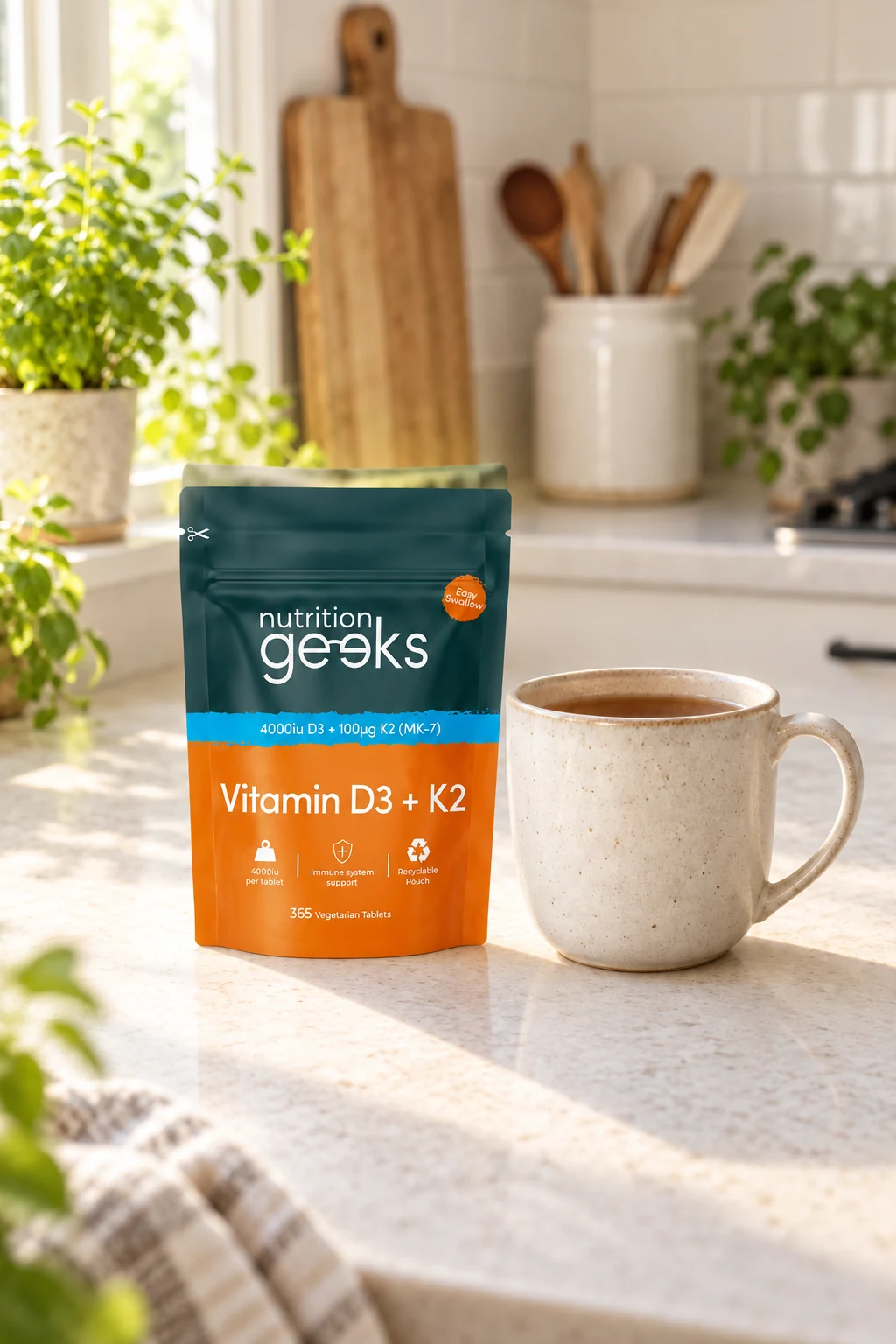
If you want one supplement containing both vitamin D3 and K2, Nutrition Geeks D3 with K2 is the product we would point you towards.
The small tablets come in a flat pouch, which makes storage simple. The tablets are also tiny, useful if larger supplements put you off taking them.
The formula is vegetarian, gluten-free, dairy-free and made in the UK. Each serving provides 4,000 IU, which equals 100 micrograms of vitamin D.
This is a high-strength supplement, so check your other vitamins first. The product is intended for adults, and the label states that the supplement is not intended for under-18s.
Vitamin D absorbs better with a meal containing some fat, so taking the tablet alongside breakfast, lunch or dinner makes sense.

Nutrition Geeks Vitamin D3 + K2 4000iu
A high-strength vitamin D3 paired with K2 MK-7 in one small tablet, vegetarian and made in the UK.
Shop on AmazonHow do you remember to take Vitamin D?
The best supplement is the one you remember.
Keep the pouch beside something you already use each day, such as the kettle, your toothbrush or your breakfast items. Linking the tablet with an existing part of your morning makes the routine easier to remember.
You do not need a complicated plan. You need a place where the supplement stays visible and easy to reach.
Vitamin D supplements are not a replacement for a balanced diet or medical advice. If you are pregnant, take medication or feel unsure about the right amount for you, speak with your GP or pharmacist first.
As an Amazon Associate I earn from qualifying purchases, at no extra cost to you.