
Magnesium for Sleep? What You Need to Know

You get into bed tired, and your brain decides now is the perfect moment to replay the entire day.
You turn the pillow over. You check the clock again. You promise yourself an earlier night tomorrow.
Magnesium has become a fixture of the evening routine for a lot of people, and it is one of the most searched supplements in the UK. Which makes it worth knowing what it actually does, and what it does not.
What does magnesium do?
Magnesium contributes to normal muscle function, the normal functioning of the nervous system and normal energy-yielding metabolism. It also contributes to the maintenance of normal bones and teeth, and to normal psychological function.
The NHS describes its established jobs as helping turn the food we eat into energy, and keeping the parathyroid glands working properly, which matters for bone health.
Your body gets magnesium from food: spinach and other green vegetables, nuts, seeds, beans and wholemeal bread. The NHS position is that a varied and balanced diet should give you all the magnesium you need.

People still reach for a supplement for all sorts of reasons: a diet that has slipped, a routine that keeps changing, or simply wanting something deliberate in the wind-down.
Magnesium glycinate and citrate explained
Magnesium comes in several forms. Each form is paired with another ingredient, which gives the supplement its name and affects how people use it.
Magnesium glycinate, also called magnesium bisglycinate, is paired with glycine. Many people choose this form for an evening routine because it feels like a simple, gentle option.
Magnesium citrate is paired with citric acid. This form is popular in supplements and also appears in products designed to support regular digestion.
Magnesium malate is paired with malic acid. You often find it in blends alongside other forms of magnesium.
When comparing products, check the form and the amount of elemental magnesium listed on the label. This gives you a clearer idea of what each serving provides.
The magnesium supplement we would choose
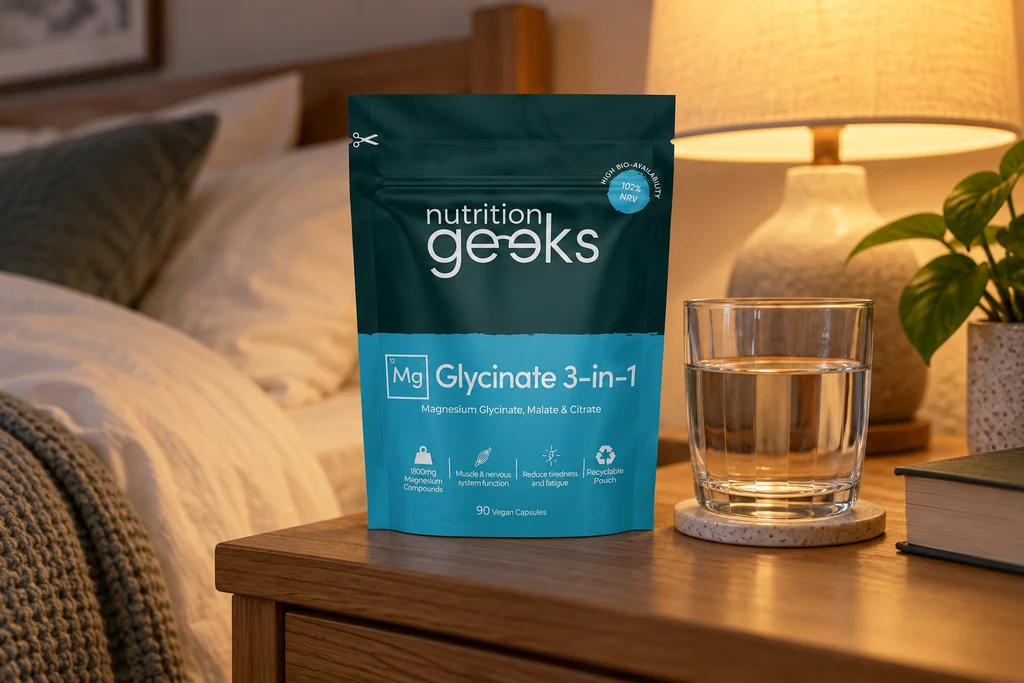
Nutrition Geeks Magnesium Glycinate 3-in-1 brings three forms together in one capsule: magnesium bisglycinate, magnesium malate and magnesium citrate.
That makes it a sensible pick if you want glycinate as the main event but like the idea of a broader blend rather than committing to a single form. The capsules are vegan, made in the UK, and the pouch is flat enough to live in a drawer.
Each vegan capsule provides 192mg of elemental magnesium, so the recommended 2-capsule daily serving delivers 384mg. The "1800mg" on the label is the combined weight of the magnesium glycinate, malate and citrate compounds, not the amount of magnesium itself.
View Nutrition Geeks Magnesium Glycinate 3-in-1
How much magnesium should you take?
The NHS advises 300mg a day for men aged 19 to 64, and 270mg a day for women in the same age range. That figure includes magnesium from food as well as from supplements.
The NHS also says that having 400mg or less a day of magnesium from supplements is unlikely to cause any harm.
So check the serving guidance on the label and add up the magnesium in everything else you take, because it hides in multivitamins.
What if capsules are not for you?
If you would prefer not to take supplements, there are plenty of alternative ways to take magnesium; try magnesium sprays, bath flakes and lotions.

A simple way to start
Choose one form of magnesium and take it at the same time every evening, give it a few weeks to see any results.
The rest of the wind-down does more work than most people credit it for: dimming the lights, putting the phone somewhere else, going to bed at roughly the same time. Magnesium is a small part of that, not a replacement for it.
Magnesium supplements are not a substitute for a balanced diet or medical advice. If you are pregnant, breastfeeding, take medication or feel unsure what is right for you, speak with your GP or pharmacist first.
As an Amazon Associate I earn from qualifying purchases, at no extra cost to you.